

Cracking the Code
A systematic approach to discovering a client’s style
By Rich Youmans
One of the hardest tasks in creating custom jewelry is not necessarily the designing, but the deciphering—learning to read a customer so that the final piece reflects her tastes. To do this, designers must often become part psychologist and part curator. They’ll start with basic questions—“How will you wear the piece? What activities do you enjoy? When will you wear it?” Then they’ll present a bounty of images, from photos of finished jewelry to CAD renderings to physical pieces, asking the customer to point out what she likes about each. Slowly, like tumblers in a combination lock, the answers build up (hopefully) until they unlock the client’s profile. Only then can the real designing begin.
It’s a time-consuming process, and largely unavoidable—few customers really know what they want when they walk into a store, and fewer still could verbally describe it. Realizing this, Lee Krombholz decided to do the next best thing: He shortened the process by using what he calls the Style Discovery method.
A Customer Vocabulary
The president of Krombholz Jewelers in Cincinnati, Ohio, Krombholz (right) is a third-generation artisan who has come to specialize in custom design (he’s even developed his own brand, Just Like You Designs). As such, he’s encountered more than his share of customers who commissioned a new piece or an heirloom’s redesign with just three words of instruction: Make it pretty.
“I had to have more information than that,” he says with a laugh. “Fifteen years ago, we would take a customer on a tour of our store, showing them the jewelry we had on display. But that didn’t always work—people didn’t want to say they didn’t like a piece, or they were low-key about what they liked.” He then began adding pictures to the process, which helped; the more images, the better.
The Style Discovery process grew out of these tours and photo sessions. “I started to build a vocabulary of what the customers liked,” Krombholz says. “We found that there are some people who are very classic and tailored, some who are classic but want something a bit more stylish, and others who come in and ask for the newest thing.” He and the staff took that vocabulary and developed “style” labels, each with its own design characteristics (see styles below)
Krombholz began using these seven style categories as the framework for his conversations with customers: He organized images by category in a scrapbook, and even considered re-organizing his store displays. He then took the next step and created a customer survey, which is now posted on his website. After supplying some basic details—age, wardrobe styles, hair and skin color—a survey respondent is presented groupings of images and asked to select preferences based on certain criteria: metal color, band style, number and position of gemstones, and the scale of a design, among others.
“There is a science behind the pictures,” Krombholz says, explaining that an image may represent one or more of the categories by degrees—one ring may be 100 percent contemporary, while another may be 70 percent contemporary with a touch of trendy. “One answer might make you a contemporary person right off the bat, another might have you only leaning that way.”
Skipping the Small Talk
Ultimately, the survey’s value is not just its ability to offer a snapshot of a customer’s tastes; more important, it gives Krombholz and his staff a starting point for conversation. That last part is key: As Krombholz notes, the custom design process is really about listening—“the more you listen to customers, the more you’ll understand and the more satisfied they’ll be.” The Style Discovery method doesn’t supplant this discovery process but streamlines it, enabling Krombholz and his staff to skip the “small talk,” so to speak, and get right to the customer’s interests.
Krombholz says his approach has been adopted by other designers—“I don’t have a patent on this,” he notes—and has worked equally as well for them, although the categories might need adjustment. “Our categories are based on the most common things we’ve heard from our customers, but those in Los Angeles or New York might need more progressive or trendy styles,” he says.
But while they may change, the categories should be kept to a manageable number. “It’s important to keep the survey to seven or eight categories,” Krombholz advises. “Too many, and it gets difficult to use.”
He also notes that the categories should be dynamic, with changes made as needed. In fact, he’s planning to add a category to his own list—“Organic”—the first change in 15 years.
“This has become a big part of what we are designing currently,” he says of the new style. He describes it, not surprisingly, as “getting its direction from nature…. Normally a soft-edged, feminine style, [it] can include an occasional thorn [and] boasts an asymmetrical feeling.” Krombholz decided to add it after realizing that his best-selling design for the past two years—a ring comprising irregular gold tiles that resemble a row of cobblestones—really represented a new style. Which just goes to show that in the discovery process, you never know where the path might lead.
Style Discovery: The Vocabulary
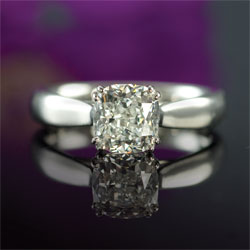
Classic: A look that’s timeless, clean, and balanced, with a high polished finish and minimal detail.
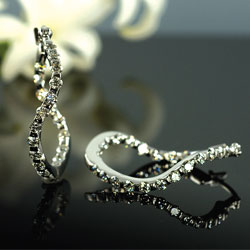
Stylish: The “Classic” style, but with a little more detail.
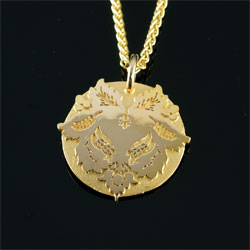
Trendy: The newest looks and styles; tends to be a moving target in need of constant update.

Organic:Gets its direction from nature… Normally a soft-edged, feminine style, it can include an occasional thorn and boasts an asymmetrical feeling.
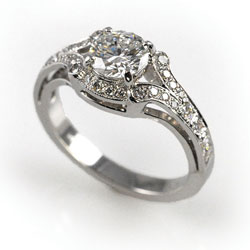
Modern Antique: A blend of past and present; typically white gold or platinum, ornate, with detail reminiscent of jewelry made in the early 1900s. Most bridal fits into this category.
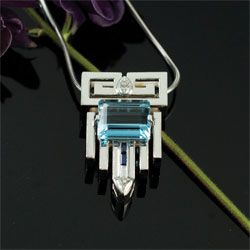
Period: Typically for those who are antique enthusiasts, who pick one period of time—Art Deco, Art Nouveau—and collect that style.
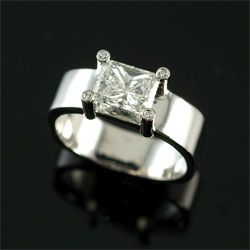
Contemporary: A look that’s clean, flat, even industrial at times, with no added detail.
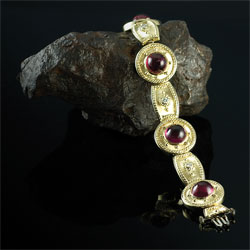
Eclectic: A mix of styles, periods, and designs from around the world.